Total Pageviews

Thursday, 18 June 2015

Black House Into White

A radio play entitled Black House Into White was first broadcast by the BBC on its Third Programme and serialised on 14th and 16th of March and on 4th April, 1949. The script came about through the co-operation of David Thomson, Dr Werner Kissling and Calum Maclean.

The three-hour long programme had a cast which featured Alex MacKenzie, who would later star as the skipper in the comedy The Maggie (1954), along with Rhona Sykes, Angus MacDonald, Duncan MacIntyre, Archie Henry, Morven Cameron, Effie Morrison and Neil Brown together with minor parts played by Joan Fitzpatrick, Pat Vicary and Tom Smith. Musical accompaniment by way of Gaelic song was supplied by John MacLeod, John MacInnes, Kate Buchanan and Calum Johnston.

The opening announcement from the radio script ably sets the scene:

1.    ANNOUNCER: “BLACK HOUSE INTO WHITE” – We present the story of the passing of a traditional way of life in the Outer Hebrides.

The script then goes on to describe stormy Hebridean weather and then a typical dwelling-place at the turn of the twentieth century. The influence of Dr Werner Kissling, an expert on blackhouses, is easily discernible:

3.    NARRATOR: To this day in the treeless, rocky islands of the Outer Hebrides, the rain and the gales of the Atlantic and a ferocious sea, have made the ordinary daily work of man into a trial strength. Thirty or forty years ago most of the people lived in houses which had thick double walls of stone and earth, stout enough to withstand the onslaught of the winds and to provide calm and shelter from the violence outside. Granite stones, of suitable shapes and sizes, were collected and built into walls, with earth and turf instead of mortar. The rounded corners of these houses (some even had rounded end-walls), the small roof and rounded roof ends, seemed to link them in origin with the ancient beehive hut, and with their low solid walls they hugged the ground against the wind. They had no windows, but where the roof joined the wall there was at least one small hole through the thatch to let in the light and to let out some of the smoke from the peat fire which burned on the middle of the floor. Most of the smoke had to find its way out through the thatch; indeed it was not intended to escape until it had lingered there and saturated the roof with peat tar. When the thatch was so sticky and sooty that no smoke could find its way through, it was stripped from the rafters and used as manure. But meantime the inside of the house was thick with peatsmoke, night and day and glistening, pitchy pendicles of black soot fringed the rafters. It was indeed a Black House, and in character it had not changed for more than a thousand years.
It will be clear from the stories to be told in this programme – stories, by the way which were noted down probably for the first time only a few weeks ago – that the oral literature of the people lived in these Black Houses had remained unchanged in character for more than a thousand years. But so had the climate of the Atlantic coast. The Hebridean leant towards the ideal, he concentrated on the past, and except where extreme necessity drove him, the desire to improve the material conditions of his life was more or less latent. But while the chance of satisfying that desire was just as remote as, let us say, his wish to tame the wind and the sea, he could ill have dispensed with his heritage of memories and with the ideals which gave him a motive in living. Not that material conditions are improving, now that the small boys of the island will discuss among themselves the merits of a jet-propelled plane and the young men and women are interested in written literature, they must somehow discover a new force to bind their communities together. They have escaped the worst evils of our industrial age. Perhaps they will be able to show us how to glean the good things from it. For their independence of mind and their strength have not changed – and the wind and the sea and the rain which govern the work they do – these have not changed.

As the narrator moves away from a graphic description of the dwelling-house to that which was then the way of life in the Hebrides, the influence of Calum Maclean can be seen. The progamme then turns to a typical ceilidh scene:

1.    RONALD: Then the man of the house would start to tell one of his stories and all the people in the house would be silent. I learnt many such stories from my father – some would take four or five evenings to tell, but the shorter ones would last perhaps an hour.
Our language, as you know, is Gaelic – my mother and my father had no English at all, and the little children had no English (no more have they nowadays) but my brother and sisters and I had learnt English at school. So now when we let you hard hi story, as he told it sitting by the fire, spinning heather ropes maybe, or making horse’s harness of seabent, Ian here will put it shortly for you in English. Much of the wonder and glory will be lost to you in English, so I will ask you first to listen to the sound of the Gaelic and the style it was spoken in that held our ears bound to the story of a hero.

There then follows an English translation of the tale known as The Son of the King of Lochlan. The tale was recorded by Maclean from Duncan MacDonald, one of the very best storytellers that Maclean had the privilege to encounter when collecting in South Uist. The translation is clearly the work of Maclean. After the story has been narrated, all the characters then discuss some points of the story and raise questions or make observations of what they had heard. Thomson doubtless had discussed with Maclean all that he had picked up about traditional ceilidhs and used his knowledge to good effect in creating an authentic atmosphere for the radio play.

The rest of the play continues in a similar vein in that it reproduces a ceilidh scene of yesteryear including more Gaelic song and stories. Yet it also contains contemporary material with mention made of the Second World War and also local issues. Such a brief summary can hardly do justice to the vitality and fullness of the original script never mind the actual performance of the actors involved in the production of the radio programme. The broadcast received some outstanding reviews: (Evening News, 23/3/49). “This was a most fluent and exciting presentation of the passing of a traditional way of life in the Outer Hebrides symoblised by the gradual disappearance of the Black House. It was a rich, artistic and emotional experience to listen to this piece which was evidently compiled in the main by an English producer―very English, I can assure you―named David Thomson.” Special praise is reserved for Duncan MacDonald’s performance: “There were some fine individual performances by a mixture of professional and amateur artists. Noteworthy was Duncan MacDonald, the traditional storyteller. He has a powerful voice which he uses with a high sense of poetry and feeling for the past.”

Other reviews were not far behind such as the one from the Bulletin (16/3/1949): “Now that was something―“Black House Into White” on the Third Programme! This fascinating script on passing of a traditional way of life in the Outer Hebrides (South Uist and Benbecula, where the oral literature had remained unchanged for a thousand years) had a magnificent subject…Some of the recordings of the wonderful heroic tales, ancient fruit of the age-long Ceilidhs, were made for the first time a few weeks ago. You don’t need to be a genius to make recordings. Ordinary common sense should have told the local men where to find such material for their recordings.” Waxing even more lyrically was a review from the Scottish Daily Mail (17/3/1949): “These wonderful stories, told in the most poetic and fiery language, whirling the mind into a starry vast by sheer power of words and imagination, are food for our starved, drab souls…Thomson’s script, simple and well knit, was not all fairy tales. It gave a sensitive and accurate interpretation (extremely well acted by our local players) of the change which had come over the islands, and of the muddled, puzzled, wandered young folk who don’t know where they are going.” Perhaps the most realistic review was published in the Observer (20/3/1949): “…a vivid depiction…of the primitive way of life which survives in the Outer Hebrides. Instead of being exhibited as anthropological oddities the islanders were revealed, in their simple dignity, coping with elemental problems for which, in their environment, there is no solution by Wage Board, By-Law or Act of Parliament. The singers and storytellers, all natives of the islands, had me spellbound by their artless recital of legend and tradition. Too often we heard these things as folk-salvage, collected by sentimentalists and displayed in the incongruous setting of one of our lesser concert-halls. But in this stark medium of wireless we made direct and dramatic contact with Barra and South Uist.”

Calum Maclean’s diary entries, originally written in Gaelic but here given in translation, reveal the buildup to the rehearsal and recording of Black House Into White.

Monday, 14 March 1949 [NFC 1300, 118–21]
In the morning I received a message from David Thomson. He came down from London last night and he asked to go down to the hotel where he’s staying so that we could go up to the BBC. Hugh MacPhee was organising matters until David Thomson arrived. He only had one day to get everything organised. Some of the folk who were taking part in the broadcast were present. Two of them spoke Gaelic and one of the woman, Rona Sykes from the Isle of Skye, spoke Gaelic as well. The two men were called Angus MacDonald and Alexander MacKenzie. Angus MacDonald came over to speak with me and he said that he had plenty of stories and he wanted to give them to me. He gave me his address and I promised to go and visit him the next time I’d be in Glasgow. He has the story about Uilleam bi ’d Shuidhe (Willie Sit Down), he told me. He also told me that he has a friend in Glasgow who has many old songs that he got in the Isle of Skye. I thought that it was pretty amazing that I should meet a man like that at the BBC’s Broadcasting Station. Angus MacDonald speaks good Gaelic. He hails from Kilmuir in the Isle of Skye. We spent all day preparing from the evening broadcast. David Thomson called the recording Black House into White. Those that read the parts were very good. They had good voices and the right accent with their English dialects. They went on air at quarter past eight and the recording lasted an hour. David Thomson and I were quite tired when it was all over. We went back to the hotel and we had one drink there. I then went back home.

Wednesday, 16 March 1949 [NFC 1300, 123]
I set off from Glasgow around six o’clock this morning. It was a fine morning and I had a good journey coming home. I arrived about four o’clock in the afternoon and found everyone well. Our programme, Black House into White, was broadcast again tonight. I went over to the hotel to hear it. We didn’t hear it very well at all but some of it was good enough.

Later that same year, Maclean had the opportunity to listen to a repeat of the programme when in Benbecula.

Sunday, 7 August 1949 [NFC 1111, 36]
I didn’t do much worth mentioning today. I spent a while in the afternoon at the house of Janet, Angus MacLellan’s widow as I had to do some writing for her, writing about the late Angus’s money. I was pleased, anyhow, that he left her a little. I then went up to Angus MacMillan’s house. Our recording, Black House into White, was broadcast on the Scottish service tonight. We all listened to it.

Maclean’s brief stint in broadcasting had actually began five or six years previously when he was in resident in Ireland (specifically Dublin) where he wrote and presented a number of programmes about Gaelic and Irish. Such experience and his undoubted ability to write attractive prose stood him in good stead for his later (and crucial) involvement during the production of Black House Into White. David Thomson, on the other hand, continued his successful career in broadcasting and writing and would later pen a number of works such as The People of the Sea (1954), in which Calum Maclean’s assistance was acknowledged, and the novel for which he is perhaps best remembered Nairn in Darkness and in Light (1987), published a year before his death.

References:
NLS, David Thomson, Acc 10129/100
NFC 1111; 1300 [Calum Maclean’s diaries for 1949]

Image:
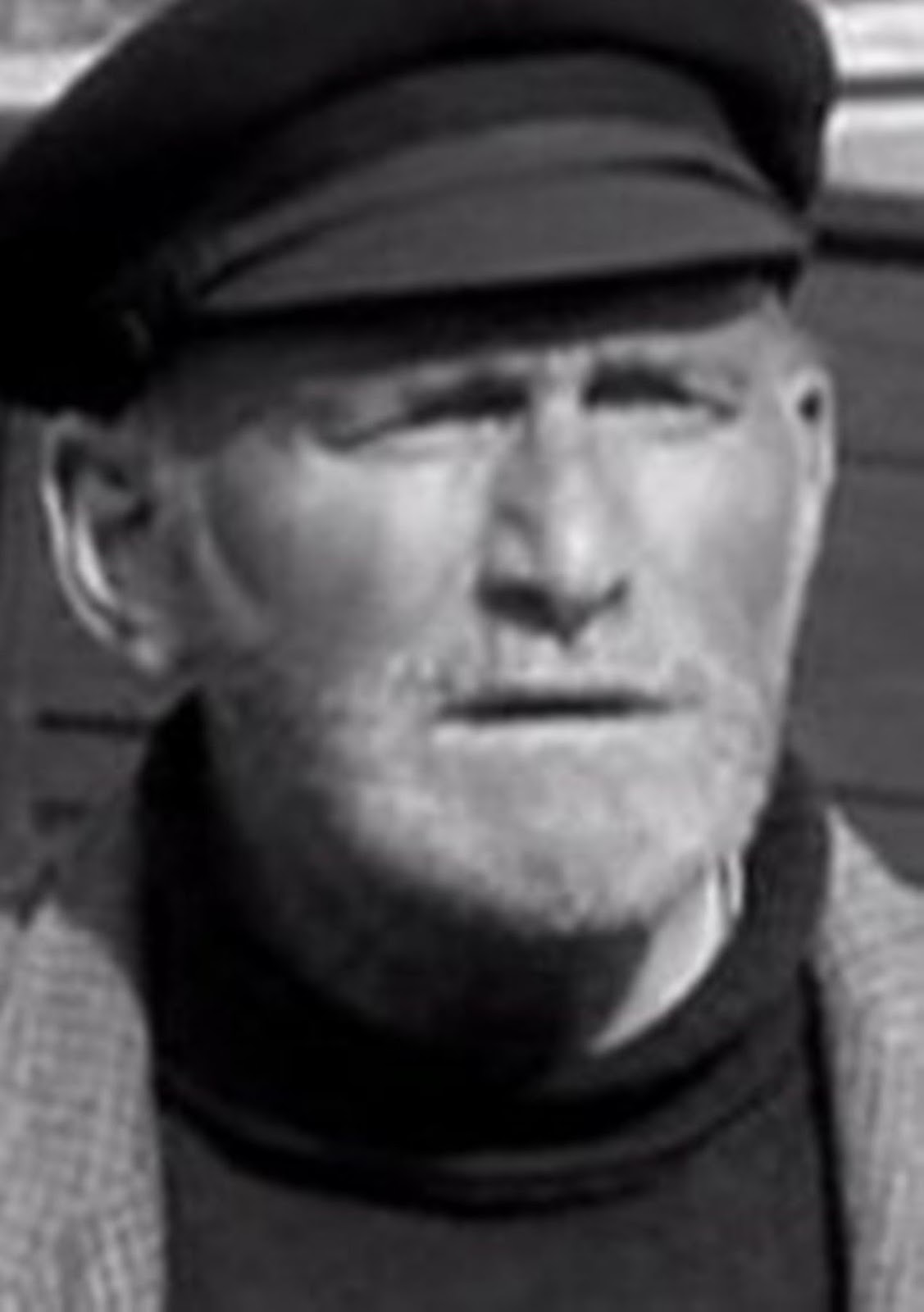
Alex MacKenzie during the filming of The Maggie

Tuesday, 19 May 2015

Dance Till You Drop

Quite a few traditional tales, usually spiced with a hint of the supernatural, were once told about Alasdair nan Cleas, one of the most famous chiefs of the MacDonalds of Keppoch, Brae Lochaber. He reputedly possessed magical powers or at least was extremely adept at legerdemain. He was educated in Italy, a country which in Gaelic tradition seems to have been the place where anyone wishing to learn the secret arts of magic would go. In Gaelic tradition it is known as “an sgoil d(h)ubh,’ literally the black school, or simply black magic/art and such was the Keppoch chief’s reputation that he earned himself the moniker Alasdair nan Cleas (Alexander of the Tricks). An example of such a story was recorded by Calum Maclean from the recitation of John MacDonald of Highbridge, Brae Lochaber, and transcribed shortly afterwards on the 21st of January 1951:

ALASDAIR NAN CLEAS AGUS AM BOIREANNACH A CHUIR E A DHANNSA

Bha fear de Chloinn ’ic Raghnaill na Ceapaich ris an abradh iad Alasdair nan Cleas. Tha ceudan de bhliadhnaichean o bha e ann. Bha e a’ gabhail ron dùthaich. ’S e latha trom blàth a bh’ ann – rud ris an abradh iad o shean ‘latha maol dubh’. Bhuail am pàthadh e. Thadhail e aig a’ bhoireannach a bha seo. Dh’iarr e deoch de bhainne oirre:
“Cha toir. Tha mi nam chabhaig tuillidh is a’ chòir airson feitheamh ort.”
“Tha thu gam dhiùltadh – a bheil?” thuirt esan.
“Tha mi gad dhiùltadh.”
“Bheir mise ort gum bi thu an còrr cabhaig na tha thu am barail.”
An uair sin dh’fhalbh e. Thòisich i air dannsa, dannsa nach tigeadh gu cheann. Thàinig an duine dhachaigh. Bha i a’ dannsa dar a thàinig an duine: “Gum beannaich e mise, a bhoireannaich, an deach thu far do rian?”
Dh’innis i dhà mu dheidhinn Alasdair nan Cleas: “’S fheàrra dhut fios a chur air. Dèan fuarag agus cuir beagan de mhìn-choire na measg. Thoirt dhà sin dar a thig e. Innis dha gum bheil thu duilich nach d’fhuair e am bainne.”
Thàinig Alasdair nan Cleas. Fhuair e an fhuarag. Dar a bha leth na fuaraig air a gabhail aige, dh’airich e cho math i. Bha an dannsa a’ fàs mall. An uair a bha an fhuarag air a gabhail aig Alasdair thug fear an taighe sùil air a bhean. Bha i an deaghaidh sgur den dannsa. Bha an dannsa thairis.

And the translation goes something like the following:

ALEXANDER OF THE TRICKS AND HOW HE MADE A WOMAN DANCE

There was one of the MacDonalds of Keppoch whom they called Alasdair nan Cleas (‘Alasdair of the Tricks’). This happened many hundreds of years ago. He was travelling through the district and it was a humid, sultry day – a thing they called from a long time ago the dogs days. He was struck by thirst. He visited this woman and he asked for a drink of milk:
“I’ll not give it to you as I’m in far to much of a rush to be waiting on you.”
“You’re refusing me – are you?” he said.
“I’m refusing you.”
“I’ll make you even busier than you could ever image.”
The he set off. She started to dance, a dance that would never finish. Her husband came home. She was dancing when her husband came in: “Bless me, oh woman, have you gone out of your mind?”
She told him about Alasdair nan Cleas: “You’d better send word to him. Make barley brose and mix in a little oatmeal. Give that to him when he arrives and tell him that you are sorry that he didn’t get a drink of milk.”
Alasdair nan Cleas arrived and he got the barley brose. When he taken half of the barely brose, he felt far the better for it. The dance began to slow down. When Alasdair has completely finished the goodman of the house looked at his wife and she had stopped dancing. The dance was finished.

A version of the tale which takes on a more literary rendering was published by Calum Iain M. MacLeòid and later reprinted in his collection Sgial agus Eachdraidh (1977) but which originally appeared some years before in a Canadian newspaper entitled the Eastern Chronicle:

Mac Mhic Raghnaill

Bha Mac Mhic Raghnaill air turus is chaidh e a steach do thigh a bhi ri oir an rathaid, a dh’iarraidh dibhe. ’N uair a chaidh e steach chunnaic e bean-an-tighe a bha an sàs anns a’ mhaistreadh. Dh’iarr e deoch oirre, ach thuirt i ris nach robh deoch aice dha.
Aig an ám sin bha móran bhuanaichean a muigh air an achadh-bhuana, is bha iad ag gabhail fadachd nach robhas ag cur ’g an iarraidh chum an tràth-nóin’. Mu dheireadh thall chuir fear-an-tighe fear de’n sgiobaidh dhachaidh a dh’fhoighneachd do bhean-an-tighe dé a bha ’g a cumail.
’N uair a ràinig e an tigh, gu dé bha ise a’ deanamh ach a’ dannsadh, is cho luath ’s a sheas an gille-mirein fhéin a stigh, shìn e ri dannsadh cuideachd.
An ceann greiseig eile chuir fear-an-tighe buanaiche eile dhachaidh, is thachair an leithid eile dhà-san. Mar sin dh’fhalbh fear an déidh fir, gus an robh a h-uile duine a bh’ aige a’ buain, ’s am fallus ’g an dalladh a’ dannsadh, ’s e so am port a bha iad a’ gabhail:―

“Chunnaic mise Mac Mhic Raghnaill,
’S dhiùlt e deoch dhomh, dhiùlt e deoch dhomh”

Dh’aithnich fear-an-tighe gur e Mac Mhic Raghnaill a rinn a’ bhuidseachd orra. Fhuair e each, is thog e air far an robh e. “’N uair a théid thu dhachaidh,” arsa Mac Mhic Raghnaill, “gheibh thu sgolb calltuinn air a stobadh os cionn an doruis, ’s nuair a bheir thu ás e, bidh iad cho socair ’s a bha iad riamh.”
Rinn e so, is sguir iad, ach cha b’urrainn daibh car tuilleadh a dheanamh leis an sgìos.

The above though was first published in J. G. McKay’s Gille a’ Bhuidseir / The Wizard's Gillie and other Tales (1914; and later editions). And the translation given in that publication was given as follows:

MACDONALD OF KEPPOCH

KEPPOCH, while once on a journey went into a house on the road to ask for a drink, and it happened that there was a woman in the house who was churning. He asked a drink of her. She told him she had none for him.
Now she had a great many reapers at work, and these reapers were getting weary and wondering that no one had been sent to fetch them to dinner, and so at last the goodman himself sent one of them home to enquire whatever it could be that was keeping her, and why she did not send for them to come to their dinner. But when the messenger arrived at the house, what was the woman doing but dancing, and the instant the messenger himself entered, he began to dance too. [The goodman sent another reaper home, but the  same thing happened to him.]
Thus it went on from man to man, until every one of her reapers were dancing, and this was the tune they were all singing—

I’ve seen the Son of the Son of Ronald,
And a drink he refused me, a drink he refused me,
I've seen the Son of the Son of Ronald, etc.

The goodman realized that it was Keppoch who had brought all this about. So he procured a horse, and away he went after him. Keppoch told him what he had done, and that his intention had been to open her eyes, and make her understand that she was not to refuse a drink to a wayfarer in future.
“When thou goest home, thou wilt find a slip of hazel fixed above the door, and when thou takest it down, they will become as quiet as ever they had been.” He did so, and they ceased dancing, but were unable to do another hand’s turn that day for weariness.

The story hangs upon the crucial peg of refusing someone hospitality, possibly one of the greatest taboos to commit at that time in the Highlands. Possibly credulity is stretched too far as surely the woman would have known to whom she was addressing when she made her refusal. Unless, of course, the Keppoch chief was dressed up as a gaberlunzie or a beggar man just as King James V allegedly would do to garner information or opinions from the people he ruled without fear of prejudice. Either way, the Keppoch chief had his revenge and she made her dance till she dropped so that she would learn a lesson not be so mean in the future to wayfarers like himself.

References:
Calum Iain M. MacLeòid, Sgial agus Eachdraidh (Glaschu: Gairm, 1977), pp. 54–55
J. G. McKay, Gille a’ Bhuidseir / The Wizard's Gillie and other Tales (Glasgow: Alex. MacLaren & Sons, 2nd ed., 1946), pp. 80–83
SSS NB 5, pp. 389–90

Image:
Jean Reynolds, Edinburgh, a noted Highland dancer during the 1950s

Thursday, 7 May 2015

The Candlesticks of Keppoch

Pricking the pomposity of overbearing English nobles or gentlemen seems to have had quite a long pedigree in Gaelic tradition. After all, what culture does not like to get one over the “old enemy”, especially if it involved winning a substantial wager. The following historical anecdote was recorded by Calum Maclean from the recitation of John MacDonald of Highbridge, Brae Lochaber, and transcribed shortly afterwards on the 21st of January 1951:

COINNLEIREAN NA CEAPAICH

Bha Dòmhnallach na Ceapaich a-mach ann an Lunnainn a’ coimhead air fìor dhuine uasal. Agus anns an àm san robh e an sin gu dè thàinig a-mach ach coinnleirean sònraichte. Agus bha iad gu math daor anns an àm agus iad eireachdail cuideachd. Agus bha coinnlear aig gach ceann den bhòrd agus iad gam moladh. Agus thuirt e:
“Chan eil coinnlear agad-sa nad dhùthaich fhèin cho brèagha sin.”
“Tha agus fada nas fheàrr na sin na coinnleirean.”
“Tha mi a’ gabhail iongantas,” thuirt e. “Chan eil fad on a thàinig na coinnleirean seo a-mach idir,” thuirt e.
“Ma-tà, beataidh iad iad,” thuirt e, “an fheadhainn a th’ agam-sa, na coinnleirean sin.”
Chaidh geall mòr a chur air – ceud not. Chaidh an geall a chur. Cha robh fhios aig Fear na Ceapaich, cha robh e airson a ligeil fhaicinn gun robh e idir cho fada air ais, ged a thuirt e siud. Ach chaidh e a dh’ionnsaigh caraide an dèidh dhà tighinn dachaigh. Agus bha an duine uasal a bh’ ann an Sasann a’ dol a thighinn a choimhead air an ceann sia seachdain:
“O! tha mi an deaghaidh,” thuirt e, “mearachd glè mhòr a dhèanadh,” thuirt e, Fear na Ceapaich.
“A bheil?” thuirt e an coimhearsnach aige ris. “Dè tha sin?”
Dh’innis e mar a bha mu dheidhinn nan coinnleirean:
“Agus chuir mi an geall ceud not,” thuirt e, “gun robh coinnleirean na b’ fheàrr agam. Agus sin nach eil agam.”
“O! ge-tà, tha. Innsidh mise dhut dè nì sinn,” thuirt e.
“Dè nì mi?” thuirt e.
“Cuiridh sibh dìreach an dà ghille is gasda ann an Loch Abar fo èididh Ghàidhealach agus fear aig gach ceann den bhòrd agus lias mhòr giuthas aige na làmh. Agus mura dèan sinn soillseachadh air bòrd,” thuirt e, “dar a bhios sibh a’ gabhail nar biadh agus ma tha coinnleirean Shasainn coltach ris na gillean a tha sin aig ceann a’ bhùird, tha mi a’ gabhail fìor-iongantas.”
’S ann mar seo a bha. Thàinig an duine-uasal. Cha robh e a’ faicinn coltas coinnleirean na nitheann. Ach dar a thàinig am biadh an àirde, thàinig an dithist a bha seo a-staigh agus sheas iad aig ceann a’ bhùird agus lias mòr de ghiuthas Lianachain aca nan làmh, agus iad a’ soillseachadh leth a’ bhaile – chan e idir an seombar san robh iad nan seasamh. Agus thuirt e:
“Dè do bharail air na coinnleirean a tha sin?” thuirt Fear na Ceapaich.
“O! chan eil leithid sin idir agam. Choisinn thu do gheall. Agus sin agad do dhuais,” thuirt e.

And the translation goes something like the following:

THE CANDLES OF KEPPOCH

MacDonald of Keppoch was out in London visiting a true gentleman. And the time that he was there special candles were taken out. They were quite expensive at that time and the looked beautiful as well. There was a candle placed at each end of the table and they were praising them. And he said:
“You don’t have candles as handsome as that in you own country.”
“Yes we do and they as far better than those candles.”
“I’m amazed,” he said. “It’s not long at all since these candles came out.”
“Well, they’ll beat them,” he said, “the onse I’ve got, than those candles.”
A large bet was wagered – one hundred pounds. The bet was made. MacDonald of Keppoch didn’t know and he didn’t wish to let them see that he was so far behind, althugh he had said what he had said. He went over to see a friend after he had come home. The nobleman in England was to going and visit him at the end of six weeks:
“Oh, I have made a huge, big mistake,” said MacDonald of Keppoch.
“Have you?” said his neighbour to him. “What’s that?”
He told him about the candles.
“I wagered a bet of one hundred pounts,” he said, “that I’ve got better candles. And that is what I don’t have.”
“Oh, but you do. I’ll tell you what we’ll do,” he said.
“What will I do,” he said.
“You’ll send the two most handsome lads in Lochaber wearing Highland dress and each one of the them at the either head of the table and each one will have a big, pine torch in his hand. And if that doesn’t light the table when you take your food and if the English candles are anything like the lads at each end of the table, I’ll be truly amazed.”
That’s how things turned out. The nobleman came and he didn’t see any sign of candles or anything else. And when the food was served, the two lads came in and they stood as each end of the table with a big torch of Lianachan pines held in their hands, and they lit up half the townstead – and not merel the room in which they were standing.
And he asked:
“What do you think of those candles?” asked MacDonald of Keppoch.
“Oh, I don’t own anything like that at all. You have won the best. And here is your prize,” he said.

Nearly a fortnight later Maclean recorded another version of the tale from Archibald MacInnes from Achluachrach, Brae Lochaber, which he transcribed on the 31st of January 1951. It is likely that this other rendition of the historical tale was prompted by John MacDonald’s previous version as it may have been mentioned in the passing. Although the following compares favourably it lacks the betting motif which perhaps takes a little away from the historical narrative:

COINNLEIREAN NA CEAPAICH

Aig aon àm fhuair Mac ’ic Raghnaill na Ceapach iomradh air Sasannach de dhuine a bha uamhraidh math dheth anns an t-saoghal, is e beairteach le òr is le airgead. Is thug e cuireadh do Mhac 'ic Raghnaill a dhol a choimhead air dhan dachaidh aige ann an Sasann. Chaidh Mac ’ic Raghnaill ann. Sheall e dha na bh’ aig dhen a h-uile nitheann bha de rìomhachd uamhraidh aige ann an coinnleirean is ann an solas aige leòr is le airgead. Thuirt e ri Mac ’ic Raghnaill gun robh fhios aige glè mhath nach b’ urrainn comas a bhith aige, is an dòigh san robh e a bhith aige-san de sholast is de rìomhachd leis na coinnleirean brèagha òir a thug e am fradharc airson gu faiceadh Mac ’íc Raghnaill iad. Ach thuirt Mac ’ic Raghnaill ris:
“Thèid thu a choimhead orm. Chì thu a h-uile nitheann a th’ agam, gach solast is gach coinnlear.”
Thairis air tìm nach robh uamhraidh fada chuir Mac ’ic Raghnaill fios air gu tighinn. Is bha fhios aige air an latha is air an oidhche is air an uair is air a’ mhionaid a thigheadh e.
Ach bha dhà dhuine dheug dhe na daoine bu sgairteile is bu choltaiche na chèile, bha iad air a faighinn aige agus air an ‘dressadh’ cho math is a ghabhadh iad le deise Ghàidhealach is le claidheamh rùisgte is le coinneal ghiubhais ann an làimh cheàrr is claidheamh rùisgte anns an làimh dheas. Nuair a thàinig an Sasannach a-staigh air an dorast, ’s ann a chaidh a chridhe na shlugan leis an t-ealladh a chunnaic e roimhe is e a’ coiseachd seachad orra. Is thuirt Mac ’ic Raghnaill ris.
“Cò is beairtiche sin na do chuid-sa, na coinnleirean òir agad-sa?”
“Is beartiche do chuid-sa.”
Cha robh an còrr aig an t-Sasannach ri ghràitinn ach a bhith gu math sàmhach.

And the translation goes something like the following:

THE CANDLES OF KEPPOCH

At one time MacDonald of Keppoch received mention of an Englishman who was very well off and possessed a great deal riches of gold and silver. And he extended an invitation to MacDonald of Keppoch to go and see at his home in England. MacDonald of Keppoch accepted and he showed him all the most beautiful things such as candles which had enough light and were made of silver. He said to MacDonald of Keppoch that he knew very well that he [MacDonald] had nothing to compare to what he had and the way in which he got light was with these beautiful gold candles which he brought to MacDonald of Keppoch to see. But MacDonald of Keppoch said to him:
“You must come and see me. You will see then what I’ve got, each light and each candle.”
Over a very short period of time MacDonald of Keppoch received word that he was coming. He know the day and the night and the very minute on which he would arrive.
And together were carried a dozen men who were impressive specimens and looked alike. They were gathered together and they were dressed as well as could be in Highland dress with a naked short and a pine candle in their left hand and the naked sword in their right hand. When the Englishman came through the door, a lump [literally his heart] appeared in his throat with such a sight he saw before him as he walked by. And MacDonald of Keppoch said
“Who is the richer than that, and you with your golden candles?”
“You are.”
The Englishman could say no more and so he kept quite quiet.

A very similar tale is also attributed to MacLeod of Dunvegan and perhaps could be said to take an even romantic turn when his hand-picked clansmen appear with pine candles in full Highland dress upon MacLeod’s table. Needless to say he won his bet. For the sake of comparison, the following version of the tale, collected in Nova Scotia, is attributed to Alasdair nan Cleas (‘Alexander of the Tricks’), chief of Keppoch:

Coinnlearan Alasdair nan Cleas

Goirid an déidh do’n Rìgh Seumas a Sia dol gu Lunnainn an 1603, agus a nis ’n a rìgh air Sasuinn is Albainn le chéile, dh’éirich aimhreit am measg nan Gàidheal. B’fheudar do Alasdair MacDhòmhnaill, Triath na Ceapaich an Loch Abar, teicheadh do’n Spàin anns a’ bhliadhna 1615.
’S e duine gaisgeil, fóghlumaite, a bh’ ann am fear na Ceapaich, agus ’s e “Alasdair nan Cleas” am farainm a bh’ aca air. Bha na leithid de eòlas aige ’s gun robh cuid a’ saoilsinn gun robh comas buidseachd aige.
Anns a’ bliadhna 1620 thug an rìgh maitheanas do Alasdair nan Cleas, is thill e air ais ás an Spàin. ’N uair a ràinig e Lunnainn rinneadh cuirm mhór dha. Ghléidheadh a’ chuirm an tigh mór, greadhnach, làn saoibhreis. Bha soithichean is truinnsearan òir air a’ bhòrd, is gach biadh a bu bhlasda.
’N uair a shuidh a’ chuideachd mu’n bhòrd thuirt fear-an-tighe ri Alasdair na Ceapaich, “Am faic thu na coinnlearan airgid a th’ agam-sa? Cha cheannaich òr iad. Chan ’eil an leithid anns an dùthaich. Tha mi cinnteach nach ’eil dad idir coltach riutha anns a’ Ghàidhealtachd.
“O thà,” arsa Fear na Ceapaich. “Tha na coinnlearan agad-sa maiseach gu dearbh, ach thig thusa do’n Cheapaich a shealltainn orm-sa, is théid mise an geall gum faic thu coinnlearan agam-sa a tha móran na’s iongantaiche na an fheadhainn agad-sa.” “Glé mhath,” ars’ an Sasunnach.
Beagan mhìosan an déidh sin ràinig an Sasunnach tigh Alasdair nan Cleas anns a’ Cheapaich, is an oidhche sin fhéin bha dinneir mhór aca.
“Càit a bheil na coinnlearan m’an robh thu a’ deanamh bòsd?” ars’ an Sasunnach. “Chì thu sin an tiota,” fhreagair Alasdair. Dh’fhosgail an dorus, thàinig pìobaire a steach, is ’n a dhéidh thàinig dà dhuine dhiag, dorus, fear an déidh fir, gach fear cho mór, eireachdail ’n a dheise Ghàidhealach, is sgolb giuthais an làimh gach fir, is gach sgolb ’n a lasair dhèarssaich.
Chuir iad cuairt air a’ bhòrd trì uairean, is an sin sheas iad ceithir thimchioll ’s an t-seòmar, dòrn-leus lasrach air a thogail gu h-àrd anns gach làimh.
“Sin agad na coinnlearan agam-sa,” arsa Fear na Ceapaich. “Chan ’eil na’s fheàrr air thalamh. ’S e Dia fhéin a tha comasach air an deanamh, agus cha cheannaich òr no airgiod iad.”
“Tha thu ceart,” ars’ an Sasunnach; “is iad as luachmhoire, agus as iongantaiche na na coinnlearan agam-sa.”
Sin agaibh matà coinnlearan Fhir na Ceapaich, fìr threuna, ghaisgeil, gach fear le solus ’n a làimh.

And the translation goes something like the following:

Alexander of the Tricks’ Candles

A short time after King James VI went to London in 1603, when he became the king of both England and Scotland, trouble arose amongst the Highlanders. Alexander MacDonald, Chief of Keppoch in Lochaber had to flee to Spain in the year 1615.
The Keppoch chief was brave and well educated and he was known as Alexander of the Tricks. He had such an amount of knowledge that some thought he possessed magic powers.
In the year 1620 the king pardoned Alexander of the Tricks and he returned from Spain. When he reached London a huge feast was held in his honour. The feast was held in a handsome-looking mansion, full of riches. Place on a table were dishes and plates of gold, with every conceivable tasty morsel.
When the company sat down around the table the host said to Alexander, Chief of Keppoch, “Do you see the silver candles I have? Gold could not by them. There’s nothing like them in the whole country. I’m sure that you’ve got nothing like them in the Highlands.
“Oh, yes we do,” replied the Keppoch chief. “Your candles are stately indeed, but if you come to Keppoch to visit me then I bet that you’ll see my candles are far more wonderful than those you have yourself.”
“Very well,” said the Englishman.
A few months afterwards, the Englishman arrived at Alexander of the Tricks’ house at Keppoch and on that very night there was a great banquet.
“Where are the candles of which you were boating?” asked the Englishman.
“You’ll see them any minute now,” replied Alexander. The door was opened and a piper came in followed by a dozen men, one after the other, and they were all tall and handsome dressed in Highland garb and they had a pine torch in each hand and each of the torches were brilliantly lit.
They circled the table three times, and then stood at each of the four corners of the hall with each of them hold up their torches in each hand.
“That’s my candles,” said the Keppoch chief. “There are no better on this earth. “God himself was able to make them and neither gold nor silver could buy them.”
“You’re quite right,” admitted the Englishman, “they’re far more valuable and wonderful than my own candles.
There you have it then: the candles in the hands of the Keppoch men, brave warriors and each of them with a light in his hand.

Yet another version of the story appeared in The Celtic Monthly:

Alasdair-nan-Cleas was considered one of the most accomplished men of his day. A great friendship is said to have existed between himself and his brother-in-law, MacFarlane of Lus. They used often to visit one another, and Keppoch House, during his time, is said to have been the scene of many a feast graced by the presence of guests from the north and south of the kingdom. In this connection there is a story told of Alasdair which was beautifully illustrated in a picture, exhibited in the Royal Academy some years ago, entitled “The Chieftain’s Candlesticks.” While on his way home from Spain he made a short stay in England, as the guest of an English baron who had been a companion of his during his college days at Rome. The visit was celebrated by a banquet given in Alasdair’s honour, at which there was a gorgeous display of silver plate. Six massive silver candlesticks, of rare workmanship, used on the occasion, became the subject of conversation. The Englishman laughingly challenged Alasdair to produce candlesticks as valuable from among the treasures of his mountain home. Keppoch’s Highland pride was roused, and he accepted the challenge, promising to forfeit three times their value if he did not produce an equal number that would far surpass them in beauty and value. Sometime after the Englishman paid a return visit to Keppoch, and he was received at the entrance of the Highland Chief's home by twelve stalwart clansmen, dressed in their picturesque native garb, and holding flaming pine torches, lighting the way to the banqueting hall. “These,” said Keppoch, “are my priceless candlesticks, and all the wealth of England could not buy them.” The English baron was fain to acknowledge his wager lost.

References:
T. D. MacDonald, ‘Lords of Lochaber: Part X’, The Celtic Monthly, vol. IV, no. 1 (Oct., 1895), pp. 51–53
Calum Iain M. MacLeòid, Sgial agus Eachdraidh (Glaschu: Gairm, 1977), pp. 51–52
SSS NB 2, pp. 111–13
SSS NB, 3, pp. 244–46

Image:
The Chieftain’s Candlesticks by John Pettie, R. A. (1839–1893)