Total Pageviews

Showing posts with label poetry. Show all posts

Tuesday, 26 November 2013

Alba ag Gul / Scotland’s Wailing

If Calum Maclean were alive today then he would have been very pleased to see the publication of the White Paper on Scotland’s independence. Maclean’s political views were pretty well formed by his early teens and throughout the years did not change one iota. The National Party of Scotland – one of the forerunners of the Scottish National Party – had been formed four years previously in 1928. The following is a poem entitled ‘Alba ag Gul’ that he published in Portree Secondary School Magazine in 1935 when he was in sixth form:

Alba ag Gul
Albainn ionmhuinn, tìr nam beann,
Tìr nan laoch bu deas le lann,
Tìr thug buaidh an iomadh blàr,
Ged leagt’ an diugh a ceann gu làr,
Albainn àrsaidh, tìr nan cliar,
Mo sgeul, mo chreach i bhi cho fior,
Gu bheil gach beann is gleann ’dol fàs
 ’S an sluagh a bh’ ann a’ dol gu bàs.

Fàs tha gach sliabh ’s an cinneadh pòr,
Fàs tha gach àit’ ’s an cluinnte ceòl,
Is sàmhach ealaidh-ghuth nam bard,
Balbh tha ceòlraidh bheanntan àrd.
Chan ’eil a’ fuireach anns na glinn
An sliochd aig an robh ’Ghàidhlig bhinn,
Lom fuar gach eilean siar a nis,
’S tha guth a’ chuain gun éisdeachd ris.


Bha uair a chualas pìob nan dos
’Ga spreigeadh measg nam beanntan cos;
Bha uair ’s am facas mile lann
’Gan rùsgadh am feadh shrath is ghleann.
Is lionmhor fiùran thuit gu bàs
Ri bhi ’gad dhion an ám do chàs;
Thu ’n diugh gun uaill, gun trèoir, gun chlì,
Mo chreadh! Gur dìomhain bha an strì.

Cuimhnich gum facas siol nan sonn
Ri bhi ’gam fògradh thar nan tonn,
Le foil gu ’n d’ thug iad o do chlann
Na criochan dhion iad riamh le lann.
Bhuidhinn Goill Shasuinn oirnn ’s gach ball,
Na balgairean ’s iad rinn ar call,
Ach nan robh sinn dian gach aon,
Chaisgeamaid iad a tha ’gar claon’.


Chan leinn an saoibhreas againn fhìn,
Cha leinn an stiùir ni cùrs’ ar tìr,
Fann tha ‘n fhuil bha craobhach dearg
Gann tha am pòr bha cròdha garg,
Dh’ fhalbh an sliochd gasda gaisgeil cruaidh,
’S an t-strì ’n còmhnuidh bheireadh buaidh;
Thréig sluagh na h Albann, glòir nam bean,
Mo nuar! cainnt Shasuinn bhi ‘n an ceann.

Albainn ionmhuinn, tìr nam beann,
Car son a thréig thu nis do chlann?
Thoirt daibh am misneachd is an cruas
Bha annt’ an ám bhi ‘g éirigh suas;
Biodh cuimhn’ air cliù nan saoi a dh’ fhalbh,
’S na biodh do cheòlraidh ’n còmhnuidh balbh;
Eireadh iad ’n na biodh iad mall
Gu’n caisg iad mi-rùn mór nan Gall.

And the (rather rough) translation goes something like this:

Scotland Wailing

O beloved Scotland, land of mountains,
Land of heroes who skilfully handled swords,
Land who won many a battle,
Although today her head has dropped to the floor,
O ancient Scotland, land of poets,
My tale, my ruination that it still remains true,
That each hill and glen is being emptied
And the folk there are going to die out.


Destitute each hill and all the folk,
Destitute each place where music was once heard,
And the bards’ elegant voices are now silenced,
The muse of the high hills is all but silent.
No one now stays in any of the glens
Where the folk spoke mellifluous Gaelic,
Each of the islands to the west is denuded and cold
With no one there to listen to the ocean’s roar.

At one time the skirl of pipes could be heard,
Resounding in the hollows of hills;
At one time a thousand swords could be seen
Being unsheathed amongst the straths and glens.
Many a hero has been slain in battle
Trying to protect you in the time of need,
That nowadays is bereft of pride, power or strength
Alas and alack! the struggle lacked purpose.

Remember the seed of the heroes was once seen
Who have been sent into exile over the waves,
By treachery they have taken from your children
The borders that always they defended with swords.
The English foreigners came upon us and each one
Of those rogues have ruined us,
But if each one of us had been defending
Then we would have put a stop to the rot.

We have no possession of our own wealth
We have no control of our destiny in our own country,
Weak is the blood that once flowed red
Few are the folk valiant and tough.
The tribe who were fine, heroic and hardy are gone
Who in the struggle would always secure victory;
The people of Scotland are vanquished, glory of the hills,
Woe is me! that they speak the English tongue.

O beloved Scotland, land of mountains
Why forsake your children now?
Give them courage and hardiness
They once had in order to rise again;
Let them remember the fame of past warriors
And do not let your muse be forever silenced;
Let them rise and do not let them tarry
To put an end to the great ill-will of the Lowlander.

It is a rather intriguing to speculate what type of poetry Calum Maclean would have composed if he had kept at it. Certainly this rather youthful piece shows great potential. As an undergraduate at the University of Edinburgh, Maclean was politically active and he took every opportunity, it seems, to vent his feelings about Scottish nationalism. He even had the temerity to publically reproach Sir Thomas Holland (1868–1947), elected Principal of the University in 1929, who, in Maclean’s opinion, personified all that was wrong with Scotland at that time. 

Later, as an exile in Ireland between 1939 and 1946, Maclean even came under the suspicion of the G2, the Irish Secret Police working as part of the Irish Army’s Intelligence Section, which had opened up a file on him. Some, if not all, of the letters received by Sorley from Calum Iain were marked ‘opened by the examiner’ and it is probably inconceivable that word did not reach back to him in Clonmel that his correspondence and, he himself by implication, was under surveillance:

Material was gathered on the potential threats posed by other Scots in Ireland at the time. Colm MacClean [sic] was working at Clonmel Industries when he became of interest to G2. He was known as a Scottish nationalist, although again not a member of the SNP, but of the ‘younger University Scot[tish] Gaelic group’. A native of ‘one of the islands and’ fluent in Gaelic, MacClean appeared in Ireland in 1939 ‘principally to avoid conscription’, according to G2’s informant. Although this informant ‘never heard him discuss any subjects of interest to us’ and he expressed no affiliation as far as Irish politics were concerned, MacClean appears to have been monitored owing simply to his connections and a presumption that he was ‘as “Nationalist” as this country would care [him] to be’.

Despite what is contained in Maclean’s file, it still remains rather inexplicable why G2 had become suspicious of him in the first instance unless, of course, it was due to the ‘suspicious’ connections that he maintained. One wonders who the informant might have been and why Maclean, despite his Scottish nationalist leanings, should have been suspected personally of any political subterfuge. But it must be remembered that G2’s ‘paranoia’ with regard to resident nationalists was not without some justification:


The manager at Clonmel Industries was Seamus Horan, himself suspected of IRA affiliations, somewhat assuaged by his reported conversion to Fianna Fáil. By 1944 MacClean was also known to be friendly with members of the local branch of Ailtirí na hAiséirí (Architects of the Resurrection), but his level of interest in that fascistic, pro-German organisation was unknown. To complete the array of potential threats, MacClean’s brother, a poet, was known to be ‘an avowed Communist.’


Apparently, G2 continued to keep tabs on Maclean when he was still resident in Clonmel but with the war drawing to a close and as the perceived threat lessened of any likelihood of any Scottish nationalists becoming embroiled or interfering in Irish politics, then circumstances would prevail whereby other more likely targets would merit their attention with regard to national security: 

‘Actively in touch with the Scottish Nationalist movement’, G2 further noted that MacClean, born into a Presbyterian family ‘of the extreme conservative type’, had converted to Catholicism since his arrival. This confessional choice would itself have marginalised him from mainstream Scottish nationalism. Even so, MacClean was moved to remark to G2’s informant in March 1943 that ‘things were going well in Scotland’; probably a reference to the reinvigoration of the SNP under Douglas Young.

References:
Daniel Leach, Fugitive Ireland: European Minority Nationalists and Irish Political Asylum, 1937–2008 (Dublin: Four Courts Press, 2009)
Calum Maclean, ‘Alba ag Gul’, Portree Secondary School Magazine (1935), p. 10
Report Colm MacClean [sic], G2/4996, I[rish] M[ilitary] A[rchives], Dublin. Military Intelligence (G2)
Andrew Wiseman, ‘‘‘The people never seem to lose their charm’: Calum Iain Maclean in Clonmel’, Tipperary Historical Journal (2012), pp. 112–32

Image:
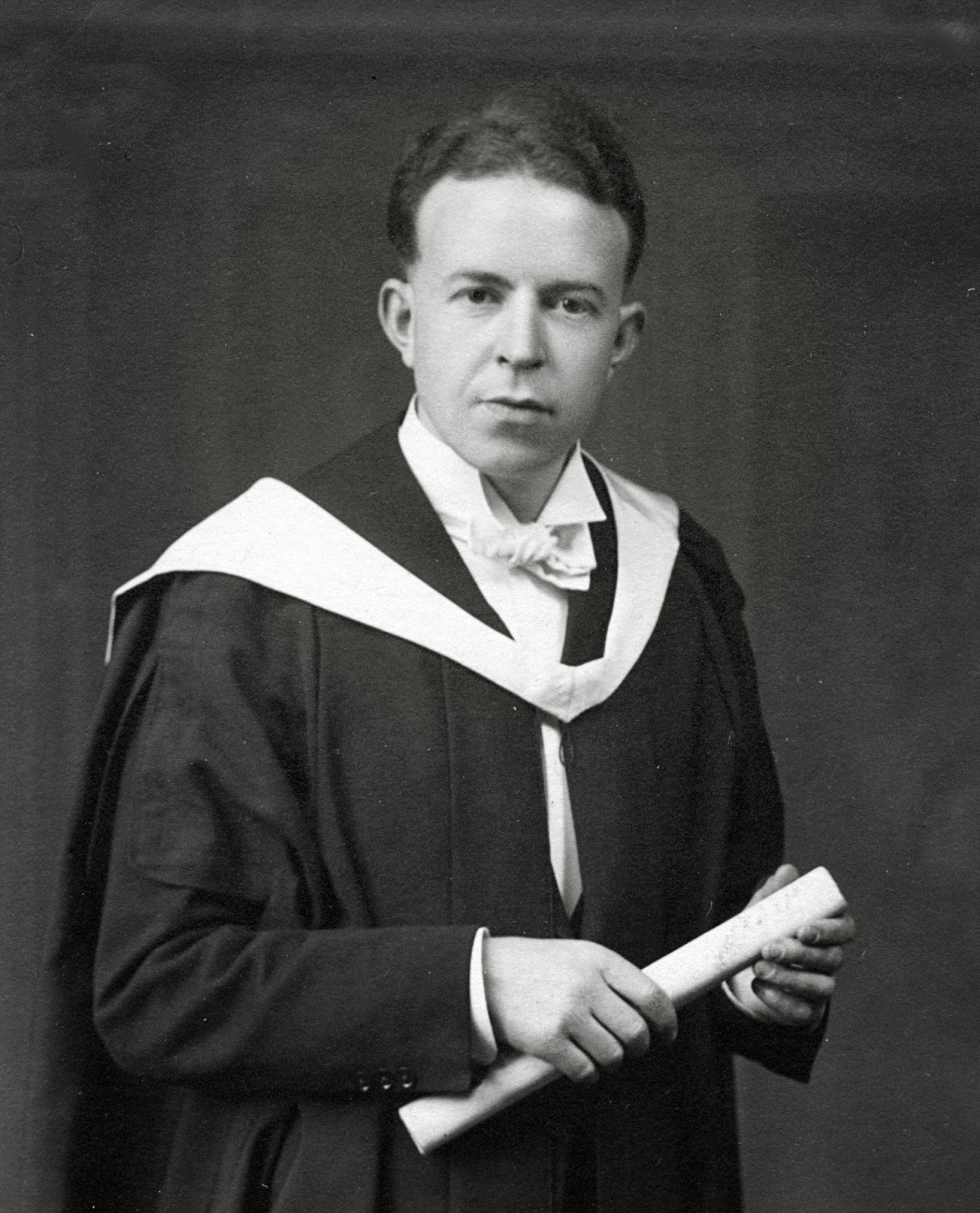
Calum I. Maclean graduating on 30 June 1939, University of Edinburgh. Courtesy of the MacLean family

Friday, 27 September 2013

Iain Lom, the Keppoch Bard

Iain Lom, Bàrd na Ceapaich, or plain John MacDonald (c. 1624–c. 1710) is doubtlessly one of the most famous poets of seventeenth-century Gaeldom. He lived through turbulent times and witnessed the second battle of Inverlochy (1645) which saw the complete drubbing of the Clan Campbell. There was absolutely no love lost between Iain Lom and the Campbells; he would take every opportunity that came his way to demean and mock them. It is sometimes easy to forget that Iain Lom MacDonald was a great grandson of the deposed Keppoch chief Iain Àlainn (or ‘Handsome John’). His full patronymic, showing his descent, is Iain mac Dhòmhnaill mhic Iain mhic Dhòmhnaill mhic Iain Àlainn. Notwithstanding his outstanding verse such a noble background could have only bolstered his status among his clansfolk. This, however, did not help him when his outspoken political verse, in the wake of The Keppoch Murder (1663) made it expedient for him to leave the Braes until the situation had ‘cooled’ down. The following biographical sketch was collected by Calum Maclean from John MacDonald of Highbridge on the 21st of January 1951:
 
Thug e treis gu h-àrd ann am Bràigh Loch Abar. Chaidh e an sin a-mach gu deas agus nach robh e na bhàrd aig Teàrlach a Dhà, a thàinig air a’ chrùn dà bhliadhna na deaghaidh do Chromwell coachladh. Chaochail Cromwell anns an sia ceud deug agus a h-ochd thar an leth-cheud. Thàinig am fear eile ann dà bhliadhna an deaghaidh sin is thug e ceithir bliadhna fichead ann. Nuair a chaochail e dh’fhàg e duais aig Iain Lom. Is bha siud aig Iain Lom gus an do chaochail e.
Bha e na adhbhar a-rithist Iain Lom aig Murt na Ceapaich gun rachadh na daoine ann an Inbhir Làire a rinn am murt. Agus thachair sin ann an 1663. Agus bha Iain Lom an uair seo a’ tighinn gun a làthainean mu dheireadh aige fhèin agus e a’ fuireach gu h-àrd ann an Allt a’ Chaorainn. Chaidh a mhac a mharbhabh le Dòmhnall Donn Mac Fear Bhoth Chunndainn, far am biodh iad a’ togail nan creach. Bha iad ann an Srath Spèidh an dithist dhiubh, Dòmhnall Donna agus Mac Iain Luim. Agus a h-uile taigh anns an robh e a’ dol a-staigh, bha iad a’ faighneachd dheth:
“Cò am fear a tha leat an seo, a Dhòmhnaill?”
“Tha mac do dh’Iain Lom.”  
Ach mu dheireadh thàinig an rud gu connsachadh agus thuirt e:
“Dh’fhaodadh tu mise innseadh na b’ fheàrr na siud, na Mac Iain Luim ag ràdha.”
“O! ma-tà,” thuirt e, “na gabh nàire a t’ athair idir,” thuirt e, “ged a tha e cho lom sin is nach fhàsadh feusag air. ’S ann mar sin a thug iad Iain Lom air.”
Ach co-dhiù mharbh Dòmhnall Donn, mharbh e Mac Iain Luim leis a’ bhiodag. Agus rinn Iain Lom òran dà, aoireadh. Agus bheir mi dhuibh earann dheth:
 
“Is truagh nach fhaca mi air creag thu,
  Agus seillean nad chluais,
  Agus luch nad achlais,
  A’ cur a h-achanaich suas;
  Agus clach air a sparradh
  Nad bheul tarsaing mhì-stuaim,
  Nan tigeadh an fheannag
  Is bàrr na teangaidh a thoirt bhuat.”
 
Chaochail e ann an 1710 agus chaidh a thìodhlacadh ann an Cille Choirill. Theireadh iad Tom Aingeal ris. Latha an tìodhlacaidh cò bh’ ann ach Aonghas Alasdair Ruaidh à Gleanna Comhann, bàrd ainmeil.
“Cluinneam dè th’ agad ri ghràitinn,” thuirt Gilleasbui’ na Ceapaich ris a’ bhàrd Thuirt e na briathran seo:
 
“Bha mi an-diugh ann an Tom Aingeal
  Is chunna mi crìoch air m’ fhear-cinnidh;
  Iubhair nam bàrd, Righ na Filidh,
  A Dhia, a dhèanamh sìth ri t’ anam;
  B’ fhuath leat Màiri, b’ fhuath leat Uilleam,
  B’ fhuath leat luchd Siol Dhiarmaid uile.
  A h-uile neach nach biodh rìoghail.
  Dh’innseadh tu dhaibh e gun iarraidh:
  Gaol an leoghainn is fuath an tuirc
  Anns an uaigh ’s a bheil do chorp.
  Dhia thoirt mathanas dhut,
  Bha thu dioltach anns an olc.”
 
And the translation goes something like the following:  
              
He spent a good deal of time in Brae Lochaber. He then went down south and he was the poet laureate of King Charles II, that came to the crown two years after the death of Cromwell in 1658. The other one came two years after that and he spent twenty-four years [on the throne]. When he died he left this prize for Iain Lom and he had this until his own death.
It was a reason enough for Iain Lom at the time of the Keppoch Murder that men would go to Inverlair to avenger the murders. That happened in 1663. And Iain Lom was coming to the end of this days and he was staying in Allt a’  Chaorainn. His son was murdered by Donald Donn the son of the Taksman of Bothuntine when they were cattle raiding. The two of them were in Strathspey, Donald Donn and Iain Lom’s son. And every house that they visited they asked:
“Who is the man along with you, Donald?”
“It is Iain Lom’s son.”
But eventually things reached a head and he said:
“You could introduce me better than that, than by saying the son of Iain Lom.”
“Oh, then,” he said, “don’t be ashamed of your father at all even though he is so bald he can’t grow a beard. That’s way they called him Iain Lom (‘Bare John’).
But in any event Donald Donn murdered the son of Iain Lom with a dagger. And Iain Lom composed a song to him, a satire. And I’ll give you a bit of it:
 
“It’s a pity that I have not seen you on a rock
With bees buzzing in your ears
And a mouse in your oxter
That would force your armpits up,
And a stone thrust
Across your immodest mouth
And if a raven came
It would take the tip of your tongue off.”
 
He died in 1710 and was buried in Cille Choirill in a place they named Tom Aingeal. On the day of the burial who made an appearance but Aonghas Alasdair Ruaidh from Glencoe, a renowned bard.
“Let me hear what you have to say,” said Archibald of Keppoch to the bard. And so he related the following verse:
 
  “I was in Tom Aingeal today
                           Where I saw the end of my kinsman;
                            Key of the bards, King of the Poets,
                           God, let his soul rest in peace;
                           You hated Queen Mary, and you hated King William,
                            You hated the whole of Clan Campbell.
                           Every one who was not royal.
                           You would tell them without asking:
                           Love of the lion and hatred of boar
                           In the grave there lies you corpse
                           God have mercy on you,
                           You were ever spiteful in vengeance.”
 
A monument was placed by the Liberal MP Charles Fraser-MacKintosh to commemorate the bard's memory in the early part of the twentieth century. Unfortunately, it was mistakenly placed over the grave of another Lochaber bard, Dòmhnall Mac Fhionnlaigh nan Dàn, which lies near the entrance to Cille Choirill. Iain Lom MacDonald’s grave which was pointed out many years ago, further up on the hill known as Tom Aingeal, has been forgotten now. This is verified by the following information that Calum Maclean collected which he later wrote about in his book The Highlands (1959):
 
Farther on to the right is the church of St Cyril (Cille Choirill). It stands high on the slope of a hill overlooking the railway line. Here it is that lain Lom, the Bard of Keppoch, has found his last resting-place. The tradition is that he expressed a wish to be buried with his face towards his beloved Corrour. A stone taller than all others in the graveyard has been raised in his honour. All other headstones face due east; lain Lom’s headstone looks southwards to Corrour. The actual spot where his remains lie is not known now. It will never be known, for the last tradition bearer who knew for certain is long dead. My kind friend, Mr Archibald Maclnnes, caretaker of the graveyard and the most accurate authority on the history of Lochaber, does not know where lain Lom lies although he knows every other grave marked and unmarked in St Cyril’s.
 
References:
Anne M. MacKenzie (ed.), Òrain Iain Luim: Songs of John MacDonald, Bard of Keppoch (Edinburgh: Oliver & Boyd, 1964)
Calum I. Maclean, The Highlands (London: Batsford, 1959)
Donald C. MacPherson, ‘The Clan Donald of Keppoch’, The Celtic Magazine, vol. 4 (1878), pp. 368–75
SSS NB 22, pp. 118–21
Rev. Allan Sinclair, ‘John MacDonald, The Lochaber Bard, and his Times’, The Celtic Review, vol. V, no. LI (January 1880), pp. 97–104
 
Image:
Iain Lom MacDonald’s headstone, Cille Choirill, Brae Lochaber.